
They came from two remarkable worlds—Russian art and Indian cinema. They built a life surrounded by artistic treasures, cultural influence and a sprawling estate. Yet, after their deaths, their legacy became entangled in contested property transactions, legal proceedings and questions of ownership. The story of Svetoslav and Devika Rani Roerich is a reminder that creating wealth is one achievement; ensuring its continuity, protection and purpose is another.
1. Two extraordinary lives and a remarkable legacy
The story of Dr. Svetoslav Roerich and Devika Rani Roerich brings together the artistic traditions of Russia, the intellectual heritage of Bengal and the pioneering years of Indian cinema.
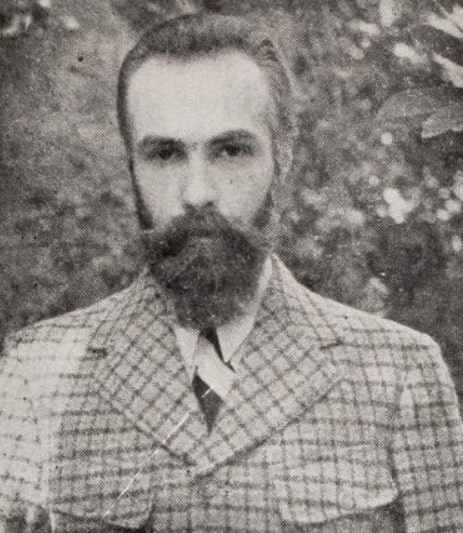
Svetoslav Roerich was born in Saint Petersburg, Russia, in 1904. He was the younger son of Nicholas Roerich, a celebrated Russian painter, philosopher and writer, and Helena Roerich, a writer and thinker. His elder brother, George Roerich, became a distinguished scholar of Asian languages and Tibetan studies. Art, philosophy and intellectual inquiry were central to the Roerich family.
Following the upheavals of the Russian Revolution, the family travelled outside Russia and eventually established deep roots in India. Nicholas Roerich settled in Naggar in the Kullu Valley of Himachal Pradesh, where the Himalayan landscape became a major influence on his work. Svetoslav also developed a lasting relationship with India, becoming known for his portraits, paintings of Indian landscapes and engagement with Indian culture. He received the Padma Bhushan in 1961 in recognition of his contribution to art.
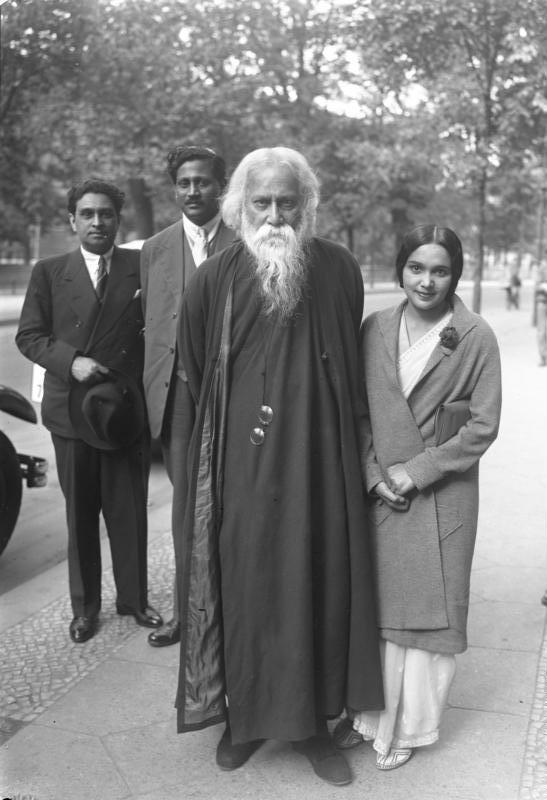
Devika Rani, born in 1908, came from an equally distinguished background. Her father, Colonel Dr. Manmatha Nath Choudhury, was a prominent medical professional who served as Surgeon-General of the Madras Presidency. She was a grandniece of Rabindranath Tagore, the Nobel Prize-winning poet and one of the most influential figures of the Bengal Renaissance.
Educated in England, Devika Rani studied acting, music and textile design. She met Himanshu Rai, an Indian actor and filmmaker, and married him in 1929. Together, they helped establish Bombay Talkies in 1934, one of the pioneering film studios of Indian cinema.
Devika Rani became a leading actor and a significant force behind the studio's operations. Following Himanshu Rai's death in 1940, she took charge of Bombay Talkies, an extraordinary achievement for a woman in an industry then dominated by men. The studio helped shape the careers of several prominent actors and contributed to the development of organised film production in India.
After selling her shares in Bombay Talkies, Devika Rani left the film industry and married Svetoslav Roerich in 1945. Their marriage brought together two individuals whose lives had been shaped by international exposure, artistic pursuits and distinguished family histories.
The couple initially lived in the Kullu Valley before moving to Bengaluru. There, they established their home at Tataguni Estate, a property of approximately 470 acres associated with linaloe cultivation, artistic work and an extensive collection of paintings, artefacts and personal possessions.
Their legacy was not merely financial. It represented a meeting of Russian artistic heritage, Indian cultural traditions, cinema and a lifetime of personal achievement. Yet, the couple had no children, making the question of who would inherit, manage and preserve their estate particularly important.
2. From Tataguni Estate to Ashoka Hotel: The final chapter
Svetoslav Roerich died on 30 January 1993, followed by Devika Rani on 9 March 1994. Their deaths marked the end of an extraordinary partnership and the beginning of a complicated chapter in the history of their estate.
The Supreme Court judgment in K.T. Plantation Pvt. Ltd. v. State of Karnataka records that, owing to old age and other ailments, the couple had reportedly been staying at Hotel Ashok in Bengaluru for approximately two years before their deaths. It also records allegations concerning attempts by certain people associated with them to secure control of their property and valuable possessions. These were allegations recorded in the proceedings, not findings that every person associated with the couple had acted improperly.
The account published by The Navhind Times under the title “Sad saga of Roerich treasures” adds a further dimension to the story, particularly concerning the couple's possessions and the events surrounding the estate.
The circumstances raise an important question: what arrangements were in place to manage the couple's affairs, safeguard their assets and ensure that their wishes would be respected when they could no longer oversee matters personally?
A large estate and valuable possessions do not automatically provide security or continuity. Those outcomes depend on clearly documented ownership, effective decision-making arrangements and people entrusted with appropriate responsibilities.
3. How the estate became the subject of litigation
The legal history of Tataguni Estate was considerably more complex than a conventional inheritance dispute. It involved contested land transactions, agricultural land-reform restrictions, an alleged will and government acquisition.
The couple owned approximately 470.19 acres of land. In 1954, the State Government's predecessor had granted them 100 acres for linaloe cultivation. Under the Karnataka Land Reforms Act, 1961, land used for specified linaloe cultivation was exempt from certain provisions of the legislation. In 1982, the Land Tribunal dropped proceedings against the Roerichs after accepting that the relevant land was exempt.
In March 1991, Svetoslav Roerich executed a registered sale deed in favour of K.T. Plantations Pvt. Ltd. for 141 acres and 25 guntas, for a stated consideration of ₹56.65 lakh.
A further transaction was claimed in February 1992, when K.T. Plantations asserted that Devika Rani had transferred 223 acres and 30 guntas for ₹89.25 lakh. Devika Rani disputed that transaction. The company instituted civil proceedings seeking a declaration of title and an injunction.
The dispute was further complicated by Mary Joyce Poonacha, who claimed rights over certain possessions under an alleged will dated 4 March 1994. Her claim added another dimension to the question of who was legally entitled to the couple's assets.
On 8 March 1994, the Karnataka Government issued a notification withdrawing the exemption available to land used for linaloe cultivation. In 1996, the State enacted the Roerich and Devikarani Roerich Estate (Acquisition and Transfer) Act, providing for the acquisition and management of the estate and the preservation of its assets.
The legislation was challenged, ultimately leading to the Supreme Court's judgment in K.T. Plantation Pvt. Ltd. & Anr. v. State of Karnataka, delivered on 9 August 2011.
4. The Supreme Court battle and its outcome
The Supreme Court case involved three principal issues: whether the Government could withdraw the land exemption, whether the special acquisition legislation was constitutionally valid, and how the rights of owners and other legitimate claimants should be protected.
K.T. Plantations challenged the withdrawal of the exemption and the acquisition of the estate, arguing that the measures affected its claimed property rights and that the compensation framework was inadequate. The State maintained that the measures were authorised by law and were necessary to preserve the estate, its cultivation and its cultural assets.
Mary Joyce Poonacha separately claimed rights over certain possessions under an alleged will, illustrating how questions concerning testamentary succession became intertwined with the wider dispute.
In its judgment dated 9 August 2011, the Supreme Court dismissed the appeals and upheld the relevant land-reform notification and the 1996 Acquisition Act. It recognised the State's authority to act under the applicable legal framework but also emphasised the constitutional protection of property rights and the importance of compensation where property is compulsorily acquired.
The Court directed that compensation be paid to legitimate claimants in accordance with law and the outcome of 122 pending litigations. It also directed that the acquired land be used only for the purpose for which it had been acquired.
The judgment did not conclusively resolve every private claim to the estate or establish that every disputed transaction was valid. Rather, it upheld the acquisition framework while leaving the determination of particular entitlements to the relevant legal proceedings.
The case is a reminder that unresolved questions of ownership can become entangled with statutory restrictions, government intervention and lengthy litigation. It also demonstrates that a dispute over an estate can extend well beyond the original family and affect the future of assets with considerable cultural and historical significance.
5. What the Roerich case teaches us about succession planning
The Roerich case should not be presented as proof that a missing will alone caused the dispute. The litigation involved contested property transactions, statutory restrictions, government acquisition and questions concerning compensation. Nevertheless, it offers powerful lessons for families with substantial wealth.
First, establish ownership before a dispute arises
Every material asset should have clearly documented ownership, supported by appropriate title documents and records. Transactions involving land, business interests, investments or valuable possessions should be properly executed and reviewed for legal compliance.
A registered document, a claim under a will and an entry in revenue records can raise different legal questions. Families should not assume that one document will automatically settle every issue.
Second, a will is necessary, but it is not the entire succession plan
A properly drafted will should identify the intended beneficiaries, appoint an executor and clearly communicate the testator's wishes.
Where appropriate, private trusts or other legal arrangements can provide continuity of management, define how assets are to be administered and establish the conditions under which beneficiaries receive distributions.
The right structure depends on the family's objectives, the nature and location of its assets, applicable law and tax considerations.
Third, inheritance and stewardship are different responsibilities
An individual may inherit an asset without having the expertise or inclination to manage it. This is particularly important for art collections, heritage properties, operating businesses and other specialised assets.
Succession planning should establish who will manage such assets, how they will be maintained and insured, and what safeguards will apply to their sale or transfer.
Fourth, families without children need a particularly clear plan
Where there are no direct descendants, the wealth creator may wish to benefit relatives, friends, charitable institutions or other causes. They may also want certain assets to remain together rather than be divided.
These intentions should be translated into legally effective arrangements, supported by clear documentation and appropriate governance.
Fifth, plan for incapacity and the final years of life
Succession planning is not limited to what happens after death. It should also consider who can manage financial and personal affairs if the wealth creator becomes unable to do so.
Appropriate arrangements for decision-making, asset administration, access to records and continuity of care can reduce uncertainty during a vulnerable period, subject to applicable law.
Sixth, professional stewardship matters
Families with substantial wealth should maintain a consolidated asset register, independent valuations where appropriate, insurance records and clear responsibilities for executors, trustees and professional advisers.
Periodic reviews should ensure that the succession arrangements remain aligned with the family's circumstances, ownership structure and objectives.
6. What ultimately happened to the wealth and the Roerich legacy?
The aftermath of the Roerich case is particularly important because it answers the question that lies at the heart of succession planning: what happens to a family's wealth when its original owners are no longer around, and who ultimately takes responsibility for preserving it?
The answer is more complicated than a simple transfer of inheritance. The estate, the paintings and the couple's other possessions followed different paths, while the cultural significance of their legacy continued to attract attention in India and Russia.
A. The estate came under the control of the Karnataka Government
Following the deaths of Svetoslav and Devika Rani, the Karnataka Government took control of the estate under the special acquisition framework enacted in 1996. The property did not simply pass to a private heir. Instead, its future became a matter of public administration, litigation and cultural preservation.
The estate has been administered through the Roerich and Devika Rani Roerich Estate Board. In 2017, the Karnataka Government amended the governing legislation to remove Russian representatives from the Board, giving the State greater control over the property's administration.
The acquisition did not automatically resolve every claim concerning individual assets or compensation. The Supreme Court's 2011 judgment upheld the acquisition framework while directing that legitimate claimants receive amounts due in accordance with law and the outcome of pending litigation.
B. What happened to the paintings and other valuables?
The paintings became one of the most significant parts of the Roerich legacy after the couple's deaths.
Following allegations of theft and related criminal proceedings, a substantial collection of Svetoslav Roerich's paintings came into the custody of the Bengaluru police. The works remained in official custody while questions concerning their safekeeping and the estate's future continued to be addressed.
A performance audit by the Comptroller and Auditor General of India recorded that 239 paintings had been handed over by the City Crime Branch to the Department of Archaeology, Museums and Heritage for safe custody in January 2020, pending the establishment of a Roerich museum. It also recorded delays in conservation work.
By 2025, reporting indicated that the 239 paintings had been restored and were housed at Bengaluru's Venkatappa Art Gallery.
This represents an important step in preserving the artistic legacy, although it should not be confused with the resolution of every ownership dispute relating to the couple's possessions.
The position of every painting, antique, item of jewellery and other movable possession should not be assumed to be identical. Their ownership, custody and legal status may differ, and publicly available information does not establish a complete, definitive inventory of all the couple's possessions or the final resolution of every claim.
C. The role of Russia and its authorities
The Russian connection is central to understanding why the Roerich legacy attracted attention beyond India.
Svetoslav was born into a distinguished Russian artistic family, and his father, Nicholas Roerich, remains an important figure in Russian and international cultural history. Svetoslav himself became deeply connected with India and acquired Indian citizenship in 1960 after spending decades in the country. His legacy consequently has both Indian and Russian cultural dimensions.
Russian diplomatic representatives expressed concern about the preservation of the estate. Contemporary reporting described Russian diplomatic interest in the condition of Tataguni and in the fate of Svetoslav Roerich's remains. These reports illustrate the cultural and diplomatic significance of the estate, but they do not establish that the Russian Government acquired ownership of it.
Russian-linked cultural institutions have also been involved in the wider preservation of the Roerich family's artistic legacy. The International Roerich Memorial Trust in Naggar, Himachal Pradesh, is associated with preserving the family's heritage at the place where Nicholas Roerich lived and worked.
It is important to distinguish between cultural involvement and legal control. The Tataguni estate remains under Indian state administration; there is no established basis to say that the Russian Government owns the estate or has assumed responsibility for all its assets.
D. What is happening to Tataguni Estate today?
The estate's future remains a matter of public policy, conservation and judicial oversight.
In October 2025, the Karnataka Cabinet approved a scaled-down ₹55 crore first phase of a proposed cultural and tourism development covering the couple's residence, the estate and its adjoining garden. The original proposal was estimated at approximately ₹99 crore but encountered difficulties involving forest clearances and environmental concerns.
The ecological sensitivity of the land became a significant issue because the estate lies near forest areas and an elephant movement corridor.
In January 2026, the Karnataka High Court directed the authorities to ensure that development activities did not proceed on the ground while a public-interest challenge was being considered. In March 2026, the Court modified its earlier order to permit limited works in non-forest areas, subject to conditions and the continuing legal proceedings.
The direction is toward the potential restoration and public presentation of the estate, but its future development remains subject to legal and environmental constraints. It would be premature to describe the proposed cultural destination as fully operational or the estate's conservation challenges as resolved.
E. Who protects a legacy when the family is no longer there?
The Roerich story demonstrates that the consequences of succession extend well beyond the question of who inherits the wealth.
The land became subject to government acquisition and constitutional litigation. The paintings required intervention by law-enforcement and cultural authorities. The residence and grounds faced maintenance and conservation challenges. Institutions and representatives from Russia expressed concern about preserving a heritage that was culturally significant to both countries.
These developments do not establish that every problem could have been prevented by a will or a private trust. Government acquisition, land-reform legislation and environmental restrictions raise separate legal questions. Nevertheless, a comprehensive succession and legacy-preservation plan could have addressed several practical risks:
- Clearly documented ownership and transfer arrangements for land and movable assets.
- A reliable inventory of paintings, jewellery, antiques and other possessions.
- Appropriate custody, insurance and conservation arrangements.
- A clearly defined role for executors, trustees or other responsible persons.
- A long-term stewardship framework for assets intended to remain together.
- Legally effective arrangements for any charitable, cultural or public purpose the owners wished to support.
The central question is not merely whether wealth passed to the next generation. It is whether the assets retained their value, whether the owners' intentions were respected, and whether the people or institutions responsible for the legacy had the authority and resources to protect it.
The Roerich legacy continues to matter because it connects art, history, family and cultural identity. Its story is also a reminder that these elements can become vulnerable when ownership and stewardship are left uncertain.
Conclusion: The strongest legacy is one that can endure
Svetoslav and Devika Rani Roerich led extraordinary lives. One belonged to a distinguished Russian artistic lineage and became closely associated with India; the other helped shape the early history of Indian cinema and came from one of Bengal's most distinguished intellectual families. Together, they created a legacy that extended far beyond the monetary value of their estate.
Their story also reminds us that a legacy does not preserve itself. It requires clarity of ownership, legally effective arrangements, capable stewardship and a considered plan for the future.
The lesson is not that every family will face the same legal circumstances. It is that no family should leave fundamental questions of ownership, control and succession unresolved until it is too late to address them.
Creating wealth is an achievement. Transferring it is a legal process. Preserving its purpose across generations is a responsibility.
The true measure of successful succession planning is not merely whether assets pass to the next generation, but whether they do so with clarity, continuity and purpose—without leaving those who follow to resolve avoidable uncertainty.
About Us
StoreOfValue is a boutique advisory platform focused on helping businesses, promoters, and leadership teams navigate these strategic situations with perspective, discipline, and value-oriented thinking.
Our aim is simple: Empowering Decisions. Fostering Growth.
To discuss transactions, restructuring, strategic partnerships, or value creation frameworks, connect with us at Office@storeofvalue.in
#SuccessionPlanning #WealthPreservation #FamilyOffice #LegacyPlanning #EstatePlanning #FamilyBusiness #WealthManagement #IntergenerationalWealth #FamilyGovernance #RoerichLegacy #ArtAndHeritage #StoreOfValue